Wednesday, March 16, 2011

Art and Religion


Art is an important element of a society’s ability to translate its religious belief to its members and to the world. Religion uses verbal arts, music, and pictorial arts in order to preserve its traditions and messages.

Verbal arts, such as myths, are used to explain why a religion has certain beliefs. These beliefs often stem from religious theories of creation and existence. Other verbal arts used to maintain religious timelines and storylines are legends. Legends are stories told and passed down as true accounts of what happened. (Haviland, 2002, pp.394-399). They are intended to support the greatness of a group’s heroes or god. In Ancient Greek society legends about heroes such as Hercules, were told to reflect the strengths and weaknesses of mortals.

Music is also a very important element of religious systems. It is used to unite and identify its members. Music is a very important element in African American religious groups and has developed into a unique style, gospel. The incorporation of traditional African rhythms and harmonies, helped unite this group of people in the south during times of slavery, and gave them a unifying force and power. Gospel was used further to transmit information long distances in the fields, and thus again it was being used as a unifying and communication system. Lyrics in songs also could be used as a way for religions in non-literate cultures to preserve oral histories and mythologies. (Haviland, 2002, pp. 403-406).

Pictorial arts are used as physical representations of religious themes and accounts. Religious art takes on many forms and styles, and reflect the ideologies and mythologies of a society. (Haviland, 2002, pp.406-414). Christian art is based on stories told from the Bible, usually depicting the crucifixion of Jesus Christ, his resurrection, or the Madonna. However pre-Christian symbolism has also been incorporated into these types of paintings that preserve European religious beliefs that pre-date Christianity. These pagan symbols, however, are applied to Christian mythologies. Islamic art, unlike Christian art, does not use figurative themes based on people or animals. This is because portraying humans and animals is seen as a form of idolatry. Therefore they developed a style of art that had an abstract and geometric motif. Words from the Qu’ran are deemed sacred and very important to calligraphy was developed as a beautiful art and used to transmit religious ideologies.

References

Haviland, William A. (2002). Cultural Anthropology. (10th ed.). Fort Worth: Harcourt College Publishers.

Lee, Valerie L., and Searles, Richard T. (2002). Study Guide for the Telecourse Faces of Culture. (8th ed.). Belmont, CA: Wadsworth/Thomson Learning.

<em>Casque D'or</em> is a Romance Set Within the Confines of a Gangster Film


Set during the Belle Époque, Becker’s Casque d’or is a romance set within the confines of a gangster film.  Manda (Serge Reggiani) isa reformed criminal who now works as a carpenter.  While chatting with Raymond, an old friend from jail, Manda sees a gangster’s moll, the beautiful, blonde Marie (Simone Signoret) waltzing reluctantly with Roland, the man she belongs to.  Marie catches his gaze and won’t let go of it even as Roland spins her around the dance floor.  Raymond and Roland are members of Felix Leca’s gang.  Leca sells wine as a front and is in good stead with the local authorities. 


Willing to give up the new life he has established, Manda comes the next evening to take Marie away from Roland.  They fight over her, resulting in Manda killing Roland.  This complicates matters because not only does Manda have to skip town to avoid the police, but also he has no idea that Leca also wants Marie and to paraphrase the song, whatever Leca wants, Leca gets.  Marie runs off to be with Manda, who after risking his life to be with her, isn’t going to give her up.  While all the story’s participants might not enjoy the final outcome, the film resolves this clash of desires in a very satisfying way for the audience.


The movie is brilliantly crafted from on all fronts.  The story is very well written with a plot that is surprising yet always believable in the choices that are made by the characters.  Nothing ever seems to happen to force the story in a certain direction and there is never a question of the motivation behind someone’s actions.  The characters, including the minor ones, appear as real people with lives that take place when they are off screen.  The performances were very good, especially Claude Dauphin as Leca.  He’s cool and calm most of the time as he tries to keep everything under his control.  This made him very believable and likable. The black-and-white cinematography looks fantastic and the camerawork is very fluid, using a lot of dolly shots instead of cutting.


Film scholar Peter Cowie provides a thoroughly informative commentary track.  He discusses earlier drafts of the story and tells you what scenes were cut or trimmed and what information they contained.  He provides background information about the actors and director, discussing their lives and stature.  He draws your attention to the details of a shot, of a character’s action, telling you what the film was showing you.  As I listened to the commentary track, I noticed that the chapter titles had changed from describing the scene to the subject matter that Cowie was discussing.  I don’t know if other commentary tracks do this, but I thought this was a stroke of genius.


The Criterion crew has done it again with some amazing finds of supplemental material.  There are interview clips from Signoret in 1963 and Reggiani in 1995.  She discusses her career choices, acting and Casque d’or.  He discusses working with Signoret as well as his friendship with her.  There are also excerpts from the French television program Cineastes de notre temps about Becker and this film.  This segment is very interesting in the way it was edited.  Interviews of a number of collaborators, such as Signoret, and admirers, such as Truffaut, were assembled together.  As someone speaks to a subject, the film cuts away to other participants listening, creating the illusion that they are together having a conversation.  The film has some silent, behind-the-scenes footage that was shot on the set during the rehearsals.  It shows Becker and the crew at work.  There’s an option to listen to film critic Philip Kemp, who wrote the liner notes for the DVD, providing commentary for the footage.  I’m not sure why you would watch it without his informative comments, but that option is available.


Casque d’or is a very good French film noir for fans of the genre.  While the theme of the film deals with giving in to your desires, I’m sure that Becker and his crew wouldn’t apply that lesson when it comes to purchasing this DVD.  Appréciez, mon ami.


How Europeans Incorporate Eastern Art


RORY &amp; DASAN WEDDING ORLEANS CLUB WWW.PERALESPRODUCTIONS.COM 504.236.8196 PHOTOGRPAHY/VIDEOGRAPHY/DJ by http://www.peralesproductions.com/ WITH NOLA MEDIA


here


European Use of Non-Western Art
Miranda Smith
Southern Utah University
December 2001


During the early 20th Century European Avant-Garde artists utilized non-Western art and incorporated it into their own art. African art was one of the most appropriated forms. Most of what was seen as influential from Africa was sculpture. African sculpture typically includes nonorganic planar shifts that contrast with Classical proportions. The elongated areas of the body, such as face, neck and torso as seen on p. 457 in the Adams book, illustrate the non-Classical nature of African art.

One of the Avant-Garde schools that specifically utilized African art was The Bridge (Die Brucke). This group was intent on building a link between their art and revolutionary ideas, and between tradition and Avant-Garde. One of the ways those in The Bridge worked toward this was by combining the geometric look of African art with more traditional ideas. The flattened forms of Kirchner's The Street (p. 459) speak to this idea. The figures in The Street are also elongated, as seen in the sculpture of the Baule ancestor from Africa.

Matisse was also influenced by African art. His work speaks of African masks. His lack of modeling in his work Madame Matisse (p. 458) bears strong resemblance to the masks found in Africa. There is also a lack of organic qualities in this painting. The hair on her head is flat, and it seems to perch on the top of her head. Matisse was also influenced by Arabian art. In his Harmony in Red (p. 463), sinuous lines are used to create an illusion of animation. Matisse coined the term "arabesque" in reference to the lines seen in Arabian architecture, such as mosques.

Emil Nolde was also influenced by African art. However he used other non-Western influences in his art. His Still Life with Masks (p. 460) is indicative of the use if non-Western art. One of the masks (the red one) is based on a drawing of an Oceanic canoe prow, the yellow skull is derived from Brazilian shrunken heads, and the green mask seems to be influenced by African art.

It is clear that these artists were very interested in appropriating other art forms for their own use. This fueled further Avant-Garde developments and shaped the art of the early 20th Century. African art appears to be the most pervasive in these works, but the influences of Arabia, the New World, and Oceania can also be seen. It is also important to note that while these artists copied the look of these other forms of art, the cultural context of the art in regard to the peoples it was borrowed from was lost.


Bibliography

Laurie Schneider Adams, A History of Modern Art (New York, N.Y.: McGraw-Hill, 2000).

Friday, March 4, 2011

Why Not Let Your Baby Cry


Baby Guti by Gui, o gato


baby seats reviews


New moms and dads seem to feel that they have to keep their baby from crying. Every time their little one cries they come running. But in my own personal opinion it is perfectly ok to let your baby cry a little. Of course you do not want to let them cry all day long. Crying themselves to sleep is perfectly normal and ok. I have tried this with my children and it has really worked out well, especially at bedtime. What I do is follow my usual bedtime routine. 

Give them their bath and then one final bottle or nurse them one last time for the night. Them I put them in their crib and let them cry just for a while. Every 15 min or so you will want to go and comfort them. It is important that if you are going to let your baby cry themselves to sleep that they are given comfort. I would also recommend covering their little hands so that they do not scratch themselves. They sell little mittens for infants or the shirts with the little hand covers attached. It is also a good deterrent if your child is starting to suck their little fingers.

No one is quite sure why we exactly do cry. Did you know that there are actually two different kids of tears? One is the Basal or continuous tears that moisten the eye, and the other is reflex tears which are caused when your eyes are irritated by some type of object. Some researchers believe that emotional tears or crying actually relieves the body of harmful and excess substances, in the same way the kidneys, and the lungs do. They are not exactly sure of the reason but evidently the body produces a tear in response to emotion that is different from the kind in response to irritation. From the moment a baby is born they need tender care. Many people feel that if they respond to a crying baby they will be spoiling them. I am not sure, but I do know that no harm can come to them by just letting them cry. 

But you should keep in mind that when a child is hungry, uncomfortable or upset, the will begin to cry. You will want to make sure that you check all of these things before you let your baby cry themselves to sleep. Some researchers seem to believe that babies who are responded to quickly during the first 6-8 months of life actually cry less than babies who have been left to cry. Of course they cry less since they are constantly being picked up. There are times when just acknowledging their cry with your own voice will be sufficient. Just a simple touch can help to provide comfort.

Believe it or not it is a baby’s job to cry. At least that is what many of the parents that I have spoken to seem to thing. You do not want to let the baby cry all the time. For example I only allow my baby to cry at bedtime for an extended period. I believe this will help him to learn what bedtime means. When the baby is constantly being rocked to sleep, as they get older they will not understand why you will suddenly stop. And you will probably have a very difficult time putting your one year old baby to sleep. Keep in mind that crying is how babies communicate what they want. The bottom line is you need to help them understand when it is time to play and when it is time to sleep.


Sunday, February 27, 2011

Anglin's Wedding Photography in Bend Oregon


sport photography kit (unpacked) by tychay


Photo Credit: celtics baby clothes


Anglin’s Wedding Photography will preserve your wedding memories with their exceptional and incomparable talents. Jake and Shereen Anglin can create beauty on film that will last a lifetime! Together, they capture the sentiment of a couple’s once in a lifetime event, their wedding day. Anglin’s portraits are incredibly intimate and share a level unlike any other wedding photographers endeavors.

The level of intimacy captured and preserved on film between the bride and groom is unsurpassed and enduring. While viewing Anglin’s sample portraits from their website www.Anglins.com, you can almost feel the emotional and intimate nature of the wedding with the soft focus and moody lighting the Anglins use. For any couple, their wedding day can be the most anxious and exciting day of their lifetime together. Photographs of this moment should be intimate not only with the wedding party but should include seemingly simple fundamentals of the wedding such as the environment, the décor and guests.
No two weddings are identical because no two people are identical. Each wedding is as unique as you and the Anglin’s expose the individuality and style of your wedding portraits. On the website, a happy couple by the water is holding up a big Thank You sign; they really appreciate your business! The Anglin’s not only take the traditional wedding shots but they also create portraits with natural body movements with natural expressions that are difficult to do in posed portraits.

Their portraits are very detail oriented with great elemental compositions. Their photographs not only portray close-ups among the bride and groom, but they also capture the smallest minutiae of the wedding and their sample portraits show an assortment of close-ups of the wedding jewelry worn or the candles lit beside a wedding cake. Another precise photograph is of white chairs and the bride’s bouquet and in yet another, the bridal bouquet on the table with lit candles only further giving an artistic element captured on film. These are small moments the bride has dreamed about her whole life. Even when the lighting seems low they capture a well lit environment that exposes the low light elements and details with clarity. Their wedding portraits carry artistic appeal. Precise close-us of a wedding cake so detailed you can actually see the very crumbs and it is elegant and beautifully done. Their special effects portraits are luminous, vibrant and brilliant with pure clarity.

Anglin’s Photography is operated by the owners, Jake and Shereen Anglin and they are truly a wonderful dynamic team. They formulate a great portraiture plan to make the wedding day a very treasured and memorable event. In addition, the Anglin’s are great to work with and they have fantastic idea’s that can be incorporated individually for uniqueness in the photographs. They are a very charming and loveable pair with vibrant personalities that make you feel very relaxed, comfortable and welcomed even when the heat of the wedding day turns on. These photographers have an artistic flare not only capturing a moment in time on film for the newlyweds but they add artistic beauty and value to the portraiture package. Anglin’s Photography offers a wide range of pricing and package arrangements with both color and black and white portrait’s. They also do engagement portraiture and this could be an added bonus for the busy bride and groom. Anglin’s Photography in Bend Oregon is precise and experienced. Please visit their website at WWW.anglins.com for further information.


Blair Hill Photography in Salt Lake City, Utah


sport photography kit (unpacked) by tychay


photo source


Blair Hill Photography services the Wasatch Valley areas locating between Provo to Logan Utah.

Blair Hill Photography began in the year 2000 when Blair first decided she wanted to use her camera for something other than fun. Though Blair had been taking photographs for a long time, and was very familiar with the SLR camera she owned, she was always just snapping photographs of family & friend adventures, music events, or other various events around the town. She had been published several times in her local newspaper and other various sources, but still never quite thought of the idea to go 'professional.'

When Blair decided that it was time to put her passion to work, she started to attend classes right away on her new favorite subject, so that she could learn as much as she could aside from what she already knew. She attended classes at her local community college, a local arts program, and MICA - Maryland Institute College of Art. She began developing her progressing in the field of musical/industrial photography, and developed a clientel very quickly.

To the downside of all the progress Blair had made with her work, in 2003 she moved 2000 miles across the county, which means her clients were not locals anymore. Discouraged, and looking for a refreshing moment in life, Blair took a break from her passion of photography until 2005. In 2005, Blair realized how much she missed doing what she loved most, taking pictures. She realized how much her focus of photography had changed though, and began to pursue portrait photography.

Since 2005, Blair has been an active portrait photographer in the greater Wasatch Valley in Utah. She has been complemented again and again on her wonderful work, with a repeat clientel that simply keeps growing and growing.

With astonishing photography, incomparable to any of the other local photographers here in Utah, yet still with the most amazingly affordable prices, Blair Hill Photography is completely unique, and perfect. Every day Blair is coming up with new ideas on how to make her work different, better. She is constantly attending trainings and schooling to further her educational background in photography, and to learn anything new she could possibly learn.

Her current creditinals include the following:

Anne Arundel Community College - 2001, Photography Certificate

Maryland Institute College of Art - 2002-2003 Photography Classes

Salt Lake Community College - 2006-current A.A. Photography Classes

In addition to her passion of photography, Blair has a B.S. In sociology from the University of Utah, and is currently working towards her masters in Gerontology. She hopes to one day mix her love for people and culture with her love and passion for photography.

To see Blairs work, please visit Blair Hill Photography by Clicking Here.


Saturday, February 26, 2011

Photography Project #1: Recreate Family Photos


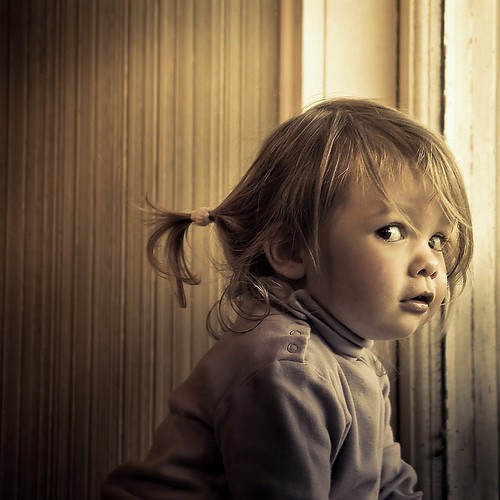
Cuba Gallery: Cute / adorable / child / portrait / eyes / light / photography by ►CubaGallery


source,image source


A fun photography project you can do with your family or friends is to recreate special photographs. Here's how to do it:

Gather old photographs. Take a look through your photo albums to gather the old photo(s) you'll use. Try to go back as far as you can. If you're a teen recreating a moment from your childhood just a few years before, you'll have a large enough contrast. If you're an adult you'll want to go back further to a time when you looked somewhat different than you do now. Pick out a photo that is really memorable to you and others. The photo could have been embarrassing when it was taken, but you laugh about it now. Narrow down your top choices and consider which ones you can realistically recreate.

Grab your family and friends in the original photograph. After you've selected a photograph make sure your photo subjects are on board with recreating the special moment. If someone didn't like their hair in a certain photo now is the time for them to change it a bit. If the photo is a goofy or silly moment you'll want to maintain that same humorous nature.

Dress the part. You don't have to try to recreate the hair and clothing styles of the 90's, 80's, 70's, 60's, but you can wear the same type of clothing. If you're wearing suit in the original photograph, put on another suit. You may also want to similar colors if possible. If a fashion has come back in style similar what you're wearing in the original photograph, that could make for a stylish comparison.

Find the location. Try to go to the same location as the original photograph so both background and setting will be consistent. In some cases there may be a location you can't access. You may not be able to get into your old high school cafeteria. Or maybe you've moved to a different house. Try to find a similar location. If the photo was taken in your old kitchen, take a similar one in your new kitchen.

Study the poses. If you and a couple of friends have distinct poses in the old photo do exactly the same thing. If the photo is more of a close up then focus more on having the same facial expressions.

Place the photos side-by-side. Now that you've taken your recreated photograph take a look at the old and new images. What similarities do you see? What differences? Enjoy your new photo as you've just created new memories.

Christmas Photography Tips and Advice


Cuba Gallery: Fork / wood / background texture / water / photography by ►CubaGallery


source


For Christmas photography tips, or any sort of photography, we want the best results to come from our time and effort. Christmas photography captures special moments, especially when children are involved. In fact, this leads to my first Christmas photography tip:

(1) Focus on the children first. This admittedly is a bias of mine, but Christmas foremost should be a children's holiday. This applies to gift-giving, and also to photography. If you disagree and/or if adults are at the center of your Christmas, fine, that's just my opinion. Just think of ol' Art Linkletter: "Kids Say the Funniest Things." Kids also make the best photo subjects, and regardless, Christmas (like Trix cereal) is for Kids.

Our Top Ten Christmas photography tips are going to relate to the strategy of taking the best photos, not to the type of camera. That's a whole 'nuther topic. In fact, yours truly is not even a shutterbug. My advice comes from working as a local daily newspaper reporter, among some of the best professional photographers, going back to the 1970s when they still used darkrooms, up to today in the digital age. These Christmas photography tips are geared toward how you interact with your subjects, once the camera is chosen and the lighting adjustments are made.

(2) Don't be one of these photographers who is constantly out front and interrupting things, asking people to pose. For your best Christmas photography, be the fly on the wall. Stay in the background and take candid photos of what's happening, photos in which the subjects don't realize you're taking their photos.

(3) A lower angle (shooting "upward" toward the subjects and the scene) often yields better results. Don't hesitate to sprawl on the floor.

(4) In your Christmas photography, look for sequences of events. A photo is just one moment in time and to capture a sequence, many folks nowadays prefer a video camera. Still, there's nothing like a series of photos. For example: (A) Child awaits anxiously for gift-giving to begin. (B) Child receives wrapped gift. ( C ) Child tears wrapping off of gift. (D) Child reacts to gift.

(5) In fact, your sequence of events could begin hours earlier. Child helps decorate tree. Child puts on Christmas outfit. Etc.

(6) Just because you're staying out of the spotlight with your camera, that doesn't mean you can't be persistent. Patience is a virtue in waiting for just the right moment, just the right shot.

(7) Be a minimalist. Don't try to illustrate the whole scene of the Christmas event at once. If it's a party, take turns focusing on individual participants, or no more than two or three in one frame. If your Christmas photography involves a group of carolers, go ahead and photograph the whole group, but also aim for closeups of one caroler, or a small group.

(8) If you still want some posed Christmas photography for the archives, that's fine. Try to do the posing at the conclusion of the shindig, not at the start or during the middle.

(9) For posed photos, try to keep the number of subjects small. Let's imagine the group of Christmas revelers is 20. Go ahead and shoot the group of 20, but keep in mind that with so many folks in there, their faces are going to be the sizes of dimes. Also shoot "subgroups" with three, four, five people.

(10) When people pose in groups, have them put their heads as close together as possible. This may seem like a minor point, but when you see the results, you'll understand. Faces can be 20 percent larger and up close if we eliminate the wasted space between their heads.

SOURCES

Personal experience

http://digital-photography-school.com/16-christmas-photography-tips

http://www.best-family-photography-tips.com/Christmas-pictures.html

http://photography.about.com/od/christmas/Christmas_Photography.htm